Album Middle East

A journey through Middle Eastern history via its coinage. Features coins from various Arab nations and regional historical powers.
Batches
UAE Dirham AED
Original Currency Board & Large Format Series
The inaugural coinage series of the United Arab Emirates, introduced following the formation of the federation and the establishment of the UAE Currency Board. This historic lineup is defined by its substantial, heavy large-format denominations, including the massive 28.5mm cupro-nickel 1 Dirham featuring the traditional Dallal coffee pot. All coins display classical Arabic calligraphy and include the early fractional bronze and cupro-nickel Fils denominations.
Central Bank Transition & Great Coinage Downsizing
This transitional batch marks the shift of monetary authority to the Central Bank of the UAE and features the sweeping coinage reform of 1988-1989. To optimize public circulation, the physical size of high-value coins was drastically reduced; the iconic 1 Dirham was shrunk from 28.5mm to a compact 24mm format, and the circular 50 Fils underwent a similar downsizing. The series also introduced modernized, bolder Arabic fonts for improved legibility.
Armenian Dram AMD
Armenia: First Dram
Inaugural circulation coins of independent Armenia issued in 1994.
Armenia: Second Series
Modern definitive series of the Republic of Armenia introduced in 2003.
Azerbaijani Manat AZN
Bahraini Dinar BHD
First National Series (1965)
The inaugural coinage of the Bahraini Dinar, replacing the Gulf Rupee. All denominations (1, 5, 10, 25, 50, and 100 Fils) feature the iconic palm tree emblem on the obverse.
Bahrain: Second Series
Modern circulation coinage (1992–Present) featuring the Kingdom's national emblem, historic dhows, and ancient Dilmun seals.
Cypriot Pound CYP
Republic First Issue - Mils Decimal Series
The initial coinage series struck by the independent Republic of Cyprus. Retaining the 1000 Mils subdivision standard, this batch completely replaces the British monarch’s portrait with the official Coat of Arms of Cyprus, featuring a dove holding an olive branch. The designs celebrate the island's antiquity, trade heritage, and nature, while maintaining the same physical specifications as the colonial era.
Pound Reform - Classic Cent Heritage Series
The comprehensive monetary reform series launched in late 1983, which shifted the subdivision of the Cypriot Pound from Mils to Cents (1 Pound = 100 Cents). Strikingly uniform, the lower denominations (1 to 20 Cents) were minted in brilliant golden nickel-brass. The reverses are celebrated for their ancient archaeological themes, reproducing iconic artifacts from Cyprus's rich Bronze Age and classical antiquity.
Egyptian Pound EGP
Early Republic Era (1953-1957)
The inaugural coinage series of the newly declared Republic of Egypt following the abolition of the monarchy. Stripped of royal portraits, this historic transition period features unique nationalist and ancient heritage designs, including the Republican Sphinx on fractional Milliemes and the sacred pharaonic Winged Sun Disc on silver Piastres.
United Arab Republic Era (1958-1971)
The distinctive coinage minted under the banner of the United Arab Republic (UAR) during Egypt's political union with Syria. All denominations display the new country name and feature the historic Hawk of Quraish with two stars on its shield, symbolizing the two nations. This batch also records the critical 1967 metallic transition from circulating silver to industrial cupro-nickel.
Late Republic - Classical Heavy Series (1972-1983)
The standard circulating coinage of the Arab Republic of Egypt from the late 20th century. This series is characterized by traditional large-format, heavy denominations struck in cupro-nickel and brass, including fractional Milliemes and early standard Piastres. Designs prominently display national symbols such as the Hawk of Quraish and the Eagle of Saladin.
Monetary Reform - First Downsizing Series (1984-2004)
A major transitional coinage phase triggered by the 1984 monetary stabilization. To optimize minting costs, all circulating Piastre denominations were drastically downsized and lightened. The series standardized the use of the Eagle of Saladin on the obverse for regular issues, while moving away from earlier heavy alloys to efficient copper-nickel and aluminum-bronze standards.
Modern Era - Bi-Metallic & Pharaoh Series
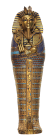
The iconic modern coinage series of Egypt launched to replace low-value paper banknotes. This batch introduces the famous bi-metallic 1 Pound coin featuring the golden death mask of Pharaoh Tutankhamun, alongside the brass-plated 50 Piastres depicting Queen Cleopatra. It marks the complete transition to plated steel-core metallurgy for durability.
Georgian Lari GEL
Israeli Pound ILP
Old Israeli Shekel ILR
New Israeli Shekel ILS
Iranian Rial IRR
Jordanian Dinar JOD
Jordan: Series I (1949)
The first coinage series issued by the Hashemite Kingdom of Jordan after independence.
Jordan: Modern Dinar
Current circulation coinage (1992+) where denominations are given in Dinar and Qirsh.
Kyrgyz Som KGS
Kuwaiti Dinar KWD
Kazakhstani Tenge KZT
Second Coinage Series (1998-2019)
The standard circulating series of Kazakhstan featuring the National Emblem. This era includes the introduction of bi-metallic 100 Tenge coins and serves as the primary currency before the 2019 Latin script transition.
Kazakhstan: Latin Script
The latest circulation series of Kazakhstan (2019+) featuring Latin legends.
Lebanese Pound LBP
Omani Rial OMR
Ottoman Lira OTL
Saudi Riyal SAR
Saudi Arabia: Faisal & Khalid
Mid-20th century coinage issued under King Faisal and King Khalid (1963–1982).
Saudi Arabia: Salman bin Abdulaziz
The sixth issue of the Saudi Riyal (2016+) featuring the latest security and designs.
Syrian Pound SYR
Turkish Lira TRL
Commemorative
Commemorative turkish coins
Turkey: Early Republic
Circulation coinage from the early-to-mid Republican era (1934–1957).
Turkey: Mid-Century Series
Circulation coinage of the mid-20th century Turkish Republic (1958–1980).
Inflationary Lira
Circulation coins documenting the high-inflation period (1981–2004) before the 2005 reform.
Inflationary Lira (Thousands)
Circulation coins documenting the high-inflation period (1981–2004) before the 2005 reform. This includes highest denominations.
Turkish New Lira TRY
Yeni Lira (2005-2008)
The transitional "Yeni Türk Lirası" series introduced after the revaluation of the currency. All coins feature the word "Yeni" before the denomination.
Modern Lira
Standard circulation coinage of the New Turkish Lira era issued since 2005.
Turkey: Commemorative Issues
Circulating commemorative coins of the Turkish Republic celebrating national milestones.
Uzbekistani Sum UZS
Privacy Policy | Built by KRYSHCHUK 2026